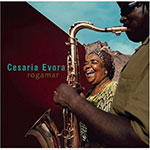
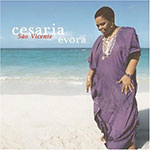
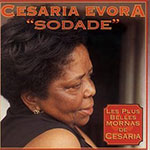
|
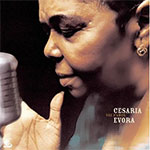
Cesaria Evora
@ the Barbican & Southbank Centre's / Royal Festival Hall
4 May 2010 - 17 November 2007
Click an image to enlarge.
Cesária Evora has died on December 2011at the age of 70
after months of poor health. Evora suffered a stroke in 2008 and
a heart attack in 2010. She announced her retirement in September
2011 after suffering another stroke.
Evora spoke of her sadness at having to retire, saying: “I
have no strength, no energy. I want you to say to my fans: forgive
me, but now I need to rest. I infinitely regret having to stop because
of illness, I would have wanted to give more pleasure to those who
have followed me for so long.”
Prime Minister Jose Maria Neves paid tribute to her “invaluable
contribution to the greatness of our nation and our pride.”
Evora is survived by her children, Eduardo and Fernanda, and two
grandchildren.
Biography
Evora was born on the 27th August 1941 in Mindelo. As a little
girl, When she was still a young girl, she went to stay with her
grandmother and was educated by nuns, an experience that taught
her to despise all moral strictures. Evora often sang a wide range
of songs and gave Sunday performances from the bandstand on the
main square, accompanied by her brother Lela on saxophone. As a
teenager, she made her debut at the Gremio. Evora’s life was
closely linked to the Lombo district, once occupied by the Portuguese
expeditionary force. There, she learnt about life and singing with
the composer Gregorio Gonçalvez, a charismatic man who adored
street theatre. At the age of twenty, Evora was invited to sing
for the Congelo (a fishing company created with local and Portuguese
capital) and was thrilled to join the notables at their private
function. Her pay consisted of dinner.
Evora’s reputation spread to the neighbouring islands. Mindelo
was packed with bars and Evora made the Café Royal her headquarters.
There, between two SG Portuguese cigarettes, she sang Mornas for
aid workers, lawyers, traders, adventurers, chicken merchants and
Portuguese civil servants. In the 60s, João Mimoz, a retail
businessman who had a little tape machine, recorded two of her songs
and sent the tape to Portugal to be made into a single. The following
year, Frank Cavaquim decided to produce another record but they
were both complete failures.
In 1975, Cape Verde discovered the repercussions of Independence
and Evora stopped performing in public, sinking into a prolonged
bout of depression made worse by excessive drinking. This silence
lasted about ten years. They say that she wandered naked and wild
through the streets of Mindelo in the grip of a “feitiço”
(an evil spell). Cape Verdean musicians despised her because of
her extremely low social standing, but her luck was to change. At
the start of the 80s, the PAIGC created a women’s organisation,
the OMCV. In its ranks were many Marxist militants, including Isaura,
a pharmacist and old friend of Evora’s who helped set up a
show in tribute to the singer in 1985. The aim was to restore the
fortunes of a woman who many claimed was the “Voice of Cape
Verde”, but for Evora, the experience was a humiliation that
brought
her virtually nothing. So Isaura secured her a place with a delegation
of Cape Verdean female singers leaving for Lisbon to make an album
that would remain obscure.
In 1987, the great singer Bana invited her and other Cape Verdean
artists to join him for
a series of concerts in the USA with audiences drawn from the Cape
Verdean community of New Jersey. The tour had its high and low points
(Evora and Bana did not always get on). However, back in Lisbon,
she agreed to appear for a while in a restaurant owned by Bana as
a way of paying for her return ticket. While she was singing in
the restaurant, she met José da Silva who was to become her
mentor and official producer. It was the end of 1987 and José
fell in love with Evora’s magnificent voice, inviting her
to come and make a record in Paris. She was now 47 with nothing
to lose and, never having been to Paris, she agreed. The trip was
arranged for the following year. In the French capital, José
hired some of the best-known Cape Verdean musicians to record the
album “La diva aux pieds nus” (The barefoot diva): Luis
Morais, Paulino Vieira, Manu Lima and others. To celebrate the release
of the record, a concert was held at the New Morning club on the
1st October 1988. The theatre was only half full, but one song “Bia
Lulucha”, a zouk-flavoured coladera - met with limited success
in the Cape Verdean community. José was determined. He knew
that the singer was talented and decided to record a second album
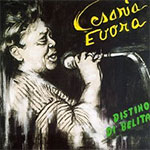
in 1990. “Distino di Belita”, included acoustic mornas
and electric coladeras. At the time, Avora was again hopping from
bar to bar, making a little money here and there. Being responsible
for her two children and her mother whose sight was failing, she
had to earn a living. The little family lived in a dilapidated house
in Mindelo at 7; rue William Du Bois near the harbour. François
Post, then press attaché for the Mélodie record company
(which helped bring Evora international fame), remembers the smell
of stagnant water, the dim light from one bare bulb hanging in each
room, the tanks of rainwater and a little black cat, “but
she was incredibly kind, she had a heart of gold.”
The “Distino di Belita” album was not a commercial
success, but it caught the ear of a few professionals, such as Christian
Mousset, director of Angoulême’s Festival Musiques Métisses.
François Post persuaded José to make a purely acoustic
album and Evora returned to France at the end of May 1991 to record
it. She appeared in Angoulême on the 2 June and at the Paris
New Morning on the 7th. While the two concerts were not yet sell-outs,
they were reported in the specialised press (with a first article
in the Libération newspaper). October saw the release of
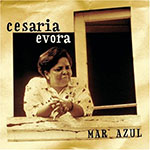
her “Mar Azul” album, which was immediately play-listed
on the FIP and France Inter radio stations. A new concert was planned
for the 14 December at the New Morning. The audience in the packed
house - mainly European now - gave her an ovation.
After “Mar Azul”, media excitement grew. Feeling confident,
José da Silva decided to begin production of a more ambitious
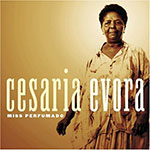
album, “Miss Perfumado”, released in 1992. With more
than 300,000 copies sold to date in France, many see it as Evora’a
masterpiece and it was nominated for the Grammy Awards after its
American release in 1999. The album was produced by José
da Silva and Paulino Vieira, the creative pianist who initially
accompanied the singer. It includes some of the finest songs in
her repertoire.
The press enthused over her unique voice, even comparing her to
Billie Holliday. All the stories that would contribute to “the
legend of Evora” filled entire columns: her unstinting love
of cognac and tobacco, her hard life in a forgotten archipelago,
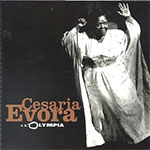
the warm nights of Mindelo… In June 1993, Avora packed theOlympia
(two sell-out concerts in June) and began her first major international
tour. Evora explains:
“So I began singing again for good… I don't believe
in dreams or fate. What delights me today is the happiness of having
got through all the years of suffering to better enjoy the life
I live now. At home, we say it's better to drink the venom first
and the honey later. Now, I'm drinking the honey.”
|





























_thumb1.jpg)
_thumb2.jpg)
_thumb3.jpg)