|
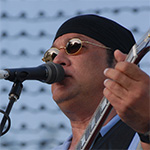
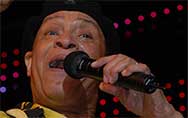
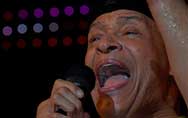
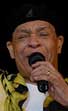
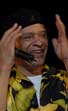
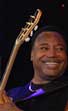
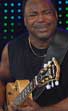
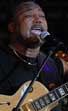
Al Jarreau & George Benson
@ St. Lucia Jazz Festival, Pigeon Island
12 May 2007
Click an image to enlarge.
The beauty and charm of
Pigeon Island during the day, or night, never fails to excite the
senses. With the Atlantic Ocean on one side, the Caribbean Sea on
the other, delicately lit palm trees gently kissing the sky, combined
with the anticipation of a tremendous musical experience is surely
enough to warm the coolest hearts.
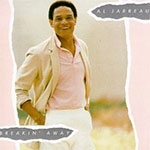
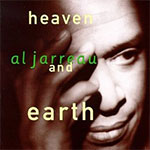
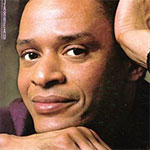
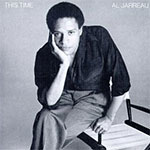
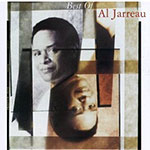
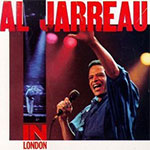
Al Jarreau biography
Al Jarreau began singing and harmonising with his
brothers from the tender age of 4. A young Jarreau would perform
solo at many local events in his hometown of Milwaukee, Wisconsin.
Jarreau enrolled at Ripon College in Wisconsin
and continued singing for fun. He performed at local gigs at weekends
and during holidays with a group named The Indigos. Jarreau graduated
with a Bachelor Of Science degree in Psychology and moved on to
the University of Lowa. Here he earned is Master’s Degree
in Vocational Rehabilitation. With qualifications in hand, Jarreau
relocated to San Francisco to begin a career in rehabilitation counselling.
As well as working as rehabilitation counsellor
during the 1960’s, Jarreau found time to sing at a small jazz
club with a trio led by keyboard master George Duke. It would not
be long before Jarreau’s voice began to win fans and gain
attention from other musicians. He would also realise that singing
would be ‘his life’.
After relocating to Los Angeles in the late 60’s,
Jarreau performed in nightspots such as Dino’s, the Bitter
End West and the Troubador. He gained national television exposure
with celebrities such as Johnny Carson, Merv Griffin, David Frost,
Mike Douglas, among others.
In 1975, Jarreau signed to Warner Brothers after
being spotted by talent scouts while performing at the Ba Bla Café
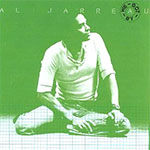
in Los Angeles. His debut album “We Got By” was released
the same year to critical acclaim. Jarreau was awarded a German
Grammy for Best New International Soloist. A second German Grammy
came his way with the release of his follow-up album “Glow”
released in 1976.
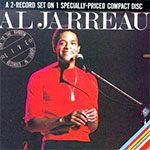
1977 would see Jarreau embark on his first world
tour. The double live album “Look To The Rainbow” featuring
selected cuts from the tour was released. Jarreau would be awarded
his first American Grammy for Best Jazz Vocal Performance the same
year.
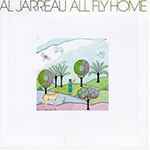
In 1978, Jarreau’s fourth album “All
Fly Home” was greeted with further acclaim, a wider audience
and a second American Grammy for Best Jazz vocalist. This album
also spawned the million selling “Breakin’ Away”
and two Grammy Awards for Best Male Pop Vocalist and Best Male vocalist.
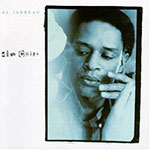
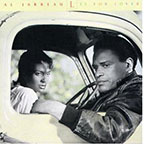
His follow up albums “Jarreau” and “High Crime”
released in 1983 spawned a string of R&B and pop hits further
cementing his international appeal at every level. By 1987 Jarreau’s
vocals could be heard on a weekly basis with the theme song for
the hit television series Moonlighting.
Jarreau further proved his versatility in the mid
90’s by accepting a three-month stint on Broadway playing
the role of Teen Angel in the musical Grease. He also appeared on
New York Undercover, Touched By An Angel and a national McDonald’s
commercial with R&B songstress Vesta Williams.
On March 6, 2001 Jarreau was honoured with a star
on the “Hollywood Walk Of Fame”.
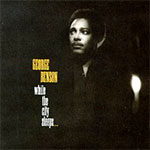
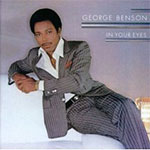
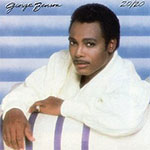
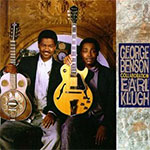
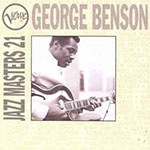
George Benson biography
“George Benson is undeniably
one of the consummate artists of our time and producing music of
his calibre is all that any producer can ask for…”
Quincy Jones
George Benson began his professional career singing,
dancing and playing the ukulele in nightclubs at the tender age
of eight. At age seventeen he formed a rock band using a guitar
made by his stepfather. As Benson was exposed to music by Charlie
Parker, Montgomery and Christian, his interest in jazz came as no
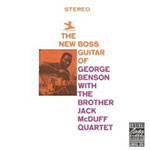
surprise to many. In 1962 a teenaged Benson joined Brother Jack
McDuff’s band. By 1965 Benson formed his own group and was
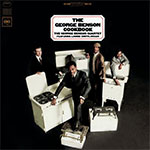
discovered by talent scout John Hammond. Benson would record two
critically acclaimed albums of the soul-jazz and hard bop genre
for Columbia as well as being included on recording sessions with
others such as Miles Davis’ “Miles in the sky”.
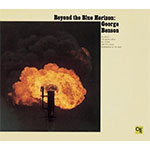
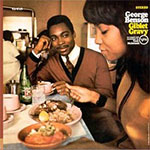
Benson switched to Verve records in 1967, and shortly after the
death of Montgomery in June 1968, producer Creed Taylor began recording
Benson with larger ensembles on A&M and big groups and all-star
combos on CTI between 1971-1976. By this time Benson’s own
ideas and creativity had begun to grow. He explains:
“I’d been screaming about my guitar
sound for years, and they didn’t want to hear about it. I
wanted to use my band in the studio, just get comfortable and test
out some stuff. But it was like pulling teeth. The first time I
tried to sing along with my guitar, everybody in the studio booed.
They said that it wouldn’t work. When I got with Tommy Lipuma
(Warner Brothers) all that changed. He said ‘Sure, let’s
go with some vocals, see where we get.’ And you know what
happened after that.”
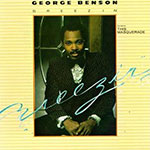
The album Breezin’ became the first jazz
record to obtain platinum sales status, with the sole vocal track
“This Masquerade” receiving substantial attention from
commercial radio. Benson had certainly reached a larger audience,
but breaking new ground was not well received by many purists:
“I guess that’s the biggest crime
I’ve made as far as jazz lovers go,” offers Benson.
“They don’t always like to see you play for the general
public. They want to be catered to. But I’ve tried that approach
and it doesn’t work for me. Nobody can stay one way for 30
years. I’ve tried to let my experience show itself. You learn,
you change. The door opened and I walked through it.”
Benson’s commercial successes continued throughout
the 1980’s, the highlight being the Quincy Jones produced
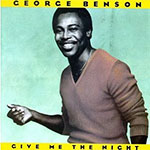
smash “Give Me The Night”. But as the 80’s drew
to a close questions were mounting about Benson’s seemingly
continued quest for greater commercial success (if possible). Benson
silenced these critics with the release of his standards album “Tenderly”
in 1989 and the swinging “Big Boss Band” album with
the Basie band in 1990. Both albums would see the return of Benson’s
guitar to the forefront of many compositions.
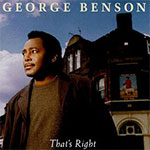
Benson followed Tommy Lipuma to the GRP label in
the mid-‘90s. The two had formed a successful commercial bond
that they both wanted to sustain. In 1996, GRP released the acclaimed
cotemporary jazz album “That’s Right”.
George Benson is an eight-time Grammy Award winner
who just keeps going. He is a diverse and unpredictable artist who
has influenced musicians from varying genres.
Benson’s acclaim both commercially and within the critical
Jazz world continues. He continues to release beautifully crafted
material and sell out concerts around the globe.
Musicians:
Al Jarreau – vocals
George Benson – vocals / guitar
Robin Francis
© Michael Valentine Studio
|


































cr_150prev.jpg)
_150prev.jpg)