|
Jimmy Cliff & Onenes
@ the Indigo 02
6 August 2012
Click an image to enlarge.
Biography
Jimmy Cliff was reggae’s first international
star and remains its greatest living ambassador, having taken the
music of Jamaica to all corners of the world. He had hits outside
of Jamaica as far back as 1969, when “Wonderful World, Beautiful
People” reached Number Six in Britain and Number 25 in the
U.S. Yet his career breakthrough came in the Seventies, with the
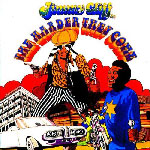
release of the soundtrack to The Harder They Come. That album served
as a primer on reggae music for the uninitiated, and half of its
tracks were by Jimmy Cliff. They included three songs that have
become reggae standards: the ebullient “You Can Get It If
You Really Want,” the anthemic “The Harder they Come”
and the hymn-like “Many Rivers to Cross.”
In addition to writing and singing those songs,
Cliff starred in the film. The Harder They Come was the first feature
film written and directed by a Jamaican and shot on location using
an all-native cast. Cliff played a budding singer from the Jamaican
countryside who gets caught up in the renegade world of drugs and
violence in the slums of Kingston. The movie became a huge success
in Jamaica and a cult classic elsewhere. The soundtrack, released
in America on Chris Blackwell’s Mango label (a subsidiary
of his Island Records) in 1973, proved to be a steady seller, though
it didn’t enter Billboard‘s album chart until March
1975 – still a full two months before Bob Marley and the Wailers
?rst cracked the U.S. charts with Natty Dread.
Jimmy Cliff was born James Chambers in St. James,
Jamaica. He adopted the stage name “Cliff” to acknowledge
the heights he intended to climb. His first recordings date back
to 1962, and two of his songs (“Ska All Over the World,”
“Trust No Man”) were included on a 1964 anthology, The
Real Jamaican Ska, released in the U.S. on Epic Records. Hooking
up with legendary Jamaican producer Leslie Kong, Cliff unleashed
a string of hit singles in his homeland throughout the Sixties,
including “Hurricane Hattie,” “Miss Jamaica”
and “King of Kings.” He was among those chosen to represent
Jamaica at the 1964 World’s Fair in New York.
Blackwell groomed Cliff to be the artist who would
break reggae into the international mainstream. Cliff moved to London
for a period to further that goal. Hard Road to Travel, his first
British album, was released in 1968, and the Top 10 success of “Wonderful
World, Beautiful People” followed the next year. His controversial
1970 single “Viet Nam” was a minor British hit. That
same year, his version of Cat Stevens’ “Wild World”
– with Stevens producing and playing piano – went to
Number Eight in the U.K. A cover of Cliff’s “You Can
Get It if You Really Want” by Desmond Dekker, his friend and
fellow Jamaican singer, soared to Number Two on the British charts
in 1970 – a few years before the inclusion of Cliff’s
original version in The Harder They Come. Cliff’s 1972 single
“Trapped” was also produced by Cat Stevens. Subsequently
covered by Bruce Springsteen, it received great exposure from its
inclusion on the We Are the World charity album from 1985.
His last album for Island Records was 1973’s
Struggling Man, at which point he signed with Reprise and embarked
on a period of stylistic experimentation that included such albums
as Another Cycle (a soul/pop album cut at Muscle Shoals Sound Studios),
Unlimited and Brave Warrior. One of the standouts in his catalog,
Give Thankx (1978), included the militant anthem “Stand Up
and Fight Back.” In the early Eighties, he returned to rootsy
reggae on Give the People What They Want (1981) and Special (1982).
The latter album, his first for Columbia Records, was recorded at
Channel One Studios in Kingston with some of Jamaica’s best
producers and engineers. Cliff dubbed his touring band Oneness,
and they performed all over the world, including Africa.
Cliff returned to movies with his appearance in
the 1985 comedy Club Paradise (starring Robin Williams), set in
the Caribbean. Cliff and Oneness toured with head-liner Steve Winwood
in 1986. In 1993, Cliff’s recording of Johnny Nash’s
early-Seventies hit “I Can See Clearly Now” –
included on the soundtrack of Cool Runnings, a film about the Jamaican
bobsledding team – became a Top 20 hit.
Jimmy Cliff’s role as a reggae pioneer was
celebrated in 2003 with a Deluxe Edition reissue of The Harder They
Come and a two-disc Jimmy Cliff Anthology.
“My role has always been as the shepherd
of reggae music,” Cliff has noted. “When they wanted
to bring reggae to America, they sent Jimmy Cliff. When they wanted
to bring reggae to England, they sent Jimmy Cliff. When they wanted
to bring reggae to Africa, they sent Jimmy Cliff.”
|





























.jpg)
cr.jpg)
.jpg)
.jpg)
.jpg)
.jpg)
.jpg)
.jpg)
cr.jpg)
cr.jpg)
.jpg)
.jpg)
.jpg)
cr.jpg)
cr.jpg)
cr.jpg)
cr.jpg)
.jpg)
cr.jpg)
cr.jpg)
.jpg)
cr.jpg)
.jpg)
.jpg)
.jpg)
cr.jpg)
.jpg)
.jpg)
.jpg)
cr.jpg)
.jpg)
.jpg)
.jpg)