|
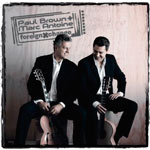
Marc Antoine & Paul Brown
@ the PizzaExpress Jazz Club
1 February 2011
Click
an image to enlarge.
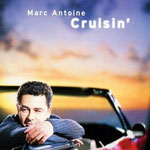
Marc Antoine biography
Guitarist, composer and producer, Marc Antoine,
was born in Paris, France on 28 May 1963. His parents bought him
his first guitar when he was 11 years old which quickly became his
third arm. Marc has had a guitar in his hands ever since.
At age 13, his father saw such rapid progress that
he sent him to the conservatory where he would study classical music.
By then his mentors were Andres Segovia and John Williams.
At 17 Antoine had already won many accolades and
started showing an interest in a variety of music genres including
jazz, rock, Afro, pop, and more. At the same time he was playing
in local bands in Brittany, France.
Tragedy struck in the summer of 1981 when his debut
career got cut short by a devastating accident to his left hand.
The surgeon told him that his chances of playing guitar again were
very slim and next to nothing. However, through the adversity, his
love and passion for music helped him overcome this tragedy and
in 1984 he was back on the scene in Paris, performing in clubs and
recording for artists like Philippe Petit, Charlelie Couture, Jill
Kaplan, France Gall, and Ray Lema.
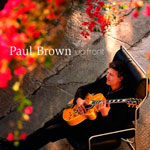
Paul Brown biography
Grabbing his cherished Gibson L5 and playing as
if all of his success as a two time Grammy winning producer was
simply a warm up, Paul Brown stepped “Up Front” as a
solo artist for the first time on his 2004 GRP Records debut and
emerged with one of contemporary jazz’s biggest albums of
the year. Now that the accolades for Up Front, whose hit single
“24/7” was named the #2 airplay cut of the year by Radio
& Records have earned him “great confidence as an artist
and even more legitimacy as a producer,” Brown gets even more
loose and funky, inviting us into a whole new type of grooving playground
in The City.
The top of the radio chart is familiar territory
for the behind the boards master many call “the Babyface of
smooth jazz.” The oft-imitated but never equalled producer,
composer and arranger has been the primary architect of the genre’s
urban sound for close to 15 years, scoring over 40 #1 airplay hits
for genre stars like Boney James, Rick Braun, Peter White, Kirk
Whalum, Euge Groove, Norman Brown, Patti Austin, Larry Carlton and
legendary labelmates Al Jarreau and, in a cool full circle career
twist, Brown’s chief jazz guitar influence, George Benson.
James, whose hit recordings routinely sell over 500,000 copies apiece,
once said, “I wouldn’t be where I am today if it
wasn’t for Paul Brown.”
Brown’s been creating instantly hummable
tracks for years with other artists, so his keen instinct for knowing
what fans want to hear is no surprise. “The City” features
some immediately identifiable crowd-pleasers—a moody, retro
chill flavored cover of Grover Washington, Jr.’s trademark
classic “Winelight” and other tracks that draw on Brown’s
deeper rock, soul and jazz influences. The first single “Cosmic
Monkey,” a silky and soulful, yet also trippy and hypnotic
ballad featuring the wordless vocals of soul legend Jeffrey Osborne,
“was conceived as a San Francisco rock combo tune, like Jefferson
Airplane and Crosby, Stills & Nash meets smooth jazz,”
Brown says. “It’s got some cool, psychedelic overtones.”
Before he became the to “go-to” producer
in smooth jazz, Brown established himself as an engineer on numerous
recordings by Luther Vandross. “ I fashioned “Old
Friends” as a straightforward duet for myself and Boney James,”
he says. “It’s kind of moody, with low toned guitar
mixed with steamy sax, and very Lutheresque.” James is
also featured on the title track, which is presented both as a vocal
(sung with graceful soul by Brown) and an instrumental. “That
one’s a great old song too, but a little more obscure,”
says Brown. “The duo was called Mark Almond Band and they
had two classic albums produced by Tommy LiPuma back in the early
70s. The original version was 12 minutes long, based around two
chords, done on nylon string and bass, and I thought it would be
the perfect vehicle for my voice. To me, their music was the start
of what evolved into contemporary and smooth jazz.”
As he hints all throughout The City and on such
recent productions as guitarist Jeff Golub’s “Temptation”,
Brown has been inspired by the new chill music that is slowly but
surely evolving into a subgenre in contemporary jazz. Brown and
the album’s co-producer D.C. go full-force into this realm
on the sonically challenging, ambient and slightly avant garde “Food
For the Moon,” which comes out of left field amidst the more
in the pocket grooves on The City. “D.C. is a multi-talented
Croatian musician and engineer who runs all my Pro Tools gear,”
the guitarist says. “The melody reminds me of an old jazz
melody from Thelonius Monk, with a real minor 6 dissonance, against
that cool Euro vibe that D.C. adds to a lot of my productions.”
With Brown’s production career in overdrive
for years and his solo career scaling new and exciting heights by
the minute, it would seem that he’s working on music, literally
“24/7.” These past few years, he’s discovered
two major hobbies that he’s almost equally passionate about
and allows him some creative rejuvenating time away from the studio.
Trumpet great Jerry Hey introduced him to the fine art of wine collecting,
and Brown has quickly become a great French wine connoisseur, with
thousands of bottles in his collection (favouring French Burgundy).
Those weekly poker nights and regular tournaments are important
to him as well.
Born and raised in L.A. to parents who were professional
singers for legends like Mel Torme (as part of The Meltones), Frank
Sinatra, Elvis and Barbra Streisand, Brown started playing drums
at age five and picked up his first guitar two years later. A self-proclaimed
Deadhead who was also fond of The Beatles and later, Peter Gabriel,
Brown jokes that he was always starting, playing in or breaking
up a band. He launched his production career unofficially with his
first gig as an assistant engineer when he was 15, finding an immediate
affinity for an environment that quickly became home when he returned
to L.A. after studying music and math at the University of Oregon.
“It’s exciting that I was able
to produce George Benson later in my career,” he says,
“because it was his album Breezin’ that helped me
realize that the guitar could be the focus of an entire album. The
guitar could hold a person’s interest for 40 minutes or an
hour. That was a big revelation back then. The reason I got into
this business was to play the guitar and perform live, and as much
success as I’ve had as a producer, I’ve always seen
that as part of my evolution as a professional to get to this point.
Making music is simple to me. When something moves me emotionally,
then I know it’s good. I simply try to make every piece of
music I create have that effect. If it doesn’t I have to change
it, then I know I have something special.”
|





























cr.jpg)
.jpg)
.jpg)
.jpg)
.jpg)
.jpg)
.jpg)
.jpg)
.jpg)

.jpg)
cr.jpg)
cr.jpg)